Hoover’s ghost stalks Trump as US energy reserves hit 40-year lows
TEHRAN — Look at a terminal in New York and the numbers suggest peace. As of writing this, crude oil futures flicker comfortably in the $80 range. The digital ticker implies Washington has the Persian Gulf under control. The ticker is lying.
Five months into the military campaign launched on February 28 against Iran, the United States has not secured the Strait of Hormuz. It has simply learned how to rig the financial instruments that measure the fallout.
Algorithms, many of them powered by large language models, execute roughly 70 percent of global energy futures trades. These systems do not track physical tankers or inspect naval blockades. They scrape headlines.
The White House realized early on that feeding the information space with orchestrated statements of “diplomatic progress” or “naval dominance” would force automated sell-offs. Paper prices would drop.
Refineries in the physical world cannot process paper derivatives. They face exorbitant spot premiums, stranded cargoes, and a blockade that Washington refuses to admit exists.
Additionally, individuals close to Trump, including Jared Kushner and Steve Witkoff, have consistently exploited the resulting oscillations, using advance knowledge of the messaging cycle to position for profits in futures and related markets.
Monetizing the panic even more
The manipulation has become a highly monetized racket. The U.S. Commodity Futures Trading Commission is quietly probing over $2.6 billion in suspicious oil trades timed precisely to presidential announcements.
High-frequency trading firms have started to purchase a feed from Trump Media dubbed Truth API, paying six figures a month to ingest the president’s posts milliseconds before the public.
For example, when a “Truth” post signals de-escalation, the machines dump massive short positions into thin Friday liquidity windows.
Similarly, a $580 million wave of sell orders in late March crashed the price of Brent crude minutes before a White House statement hit the broader wires. The administration engineered a phantom price drop, and insiders profited.
Bypasses to nowhere
Financial engineering cannot move crude. Over 13 million barrels a day sit trapped behind an Iranian arrangement that dictates transit terms.
Western war planners spent years drafting contingencies built around alternative pipelines. Saudi Arabia’s East-West line and the UAE’s Habshan-Fujairah route were supposed to absorb the shock.
The math never worked. Those alternatives carry a fraction of normal Persian Gulf exports. Additionally, the infrastructure rests inside the military envelope of Iran and the Resistance Front.
Yemeni Ansarullah have declared their own maritime embargo on Saudi shipping and targeted the kingdom’s energy hubs.
The Red Sea bypass through Bab el-Mandeb is a shooting gallery. The contingency plans have already evaporated.
1983 all over again
Stripped of a reasonable solution, the administration has turned to the Strategic Petroleum Reserve.
Washington treated its ultimate emergency cushion like a checking account. The American share of the coordinated IEA release dumped 172 million barrels onto the market. By late July, the SPR collapsed to 311.4 million barrels. That is the lowest operational level since 1983.
The sandbags are gone. Trump recently admitted at the G7 summit that American reserves hold barely four weeks of supply.
The administration burned its only structural defense mechanism to buy time and suppress pump prices ahead of the midterms. Washington is now bidding against itself in a starved market, entirely exposed to the next supply shock.
The ‘TACO Index’
Wall Street understands this vulnerability. Quants at Signum Global Advisors translated the president’s political fear into a mathematical model.
Traders call it the “TACO Index:” Trump Always Chickens Out.
The formula tracks Brent crude, 10-year Treasury yields, equity volatility, and Hormuz transit data.
History shows a rigid pattern. When composite market stress breaches 2.9 standard deviations above the baseline, the Donald folds.
During the latest round of U.S. military escalation, the index pinpointed July 26 as the date Washington would capitulate. Almost right on schedule, the bombing decreased, and the administration scrambled for negotiations as it falsely claimed the Iranians were “begging” to make a deal.
The ghost of Herbert Hoover
With less than 100 days until the November elections, Trump is consumed by a specific historical terror.
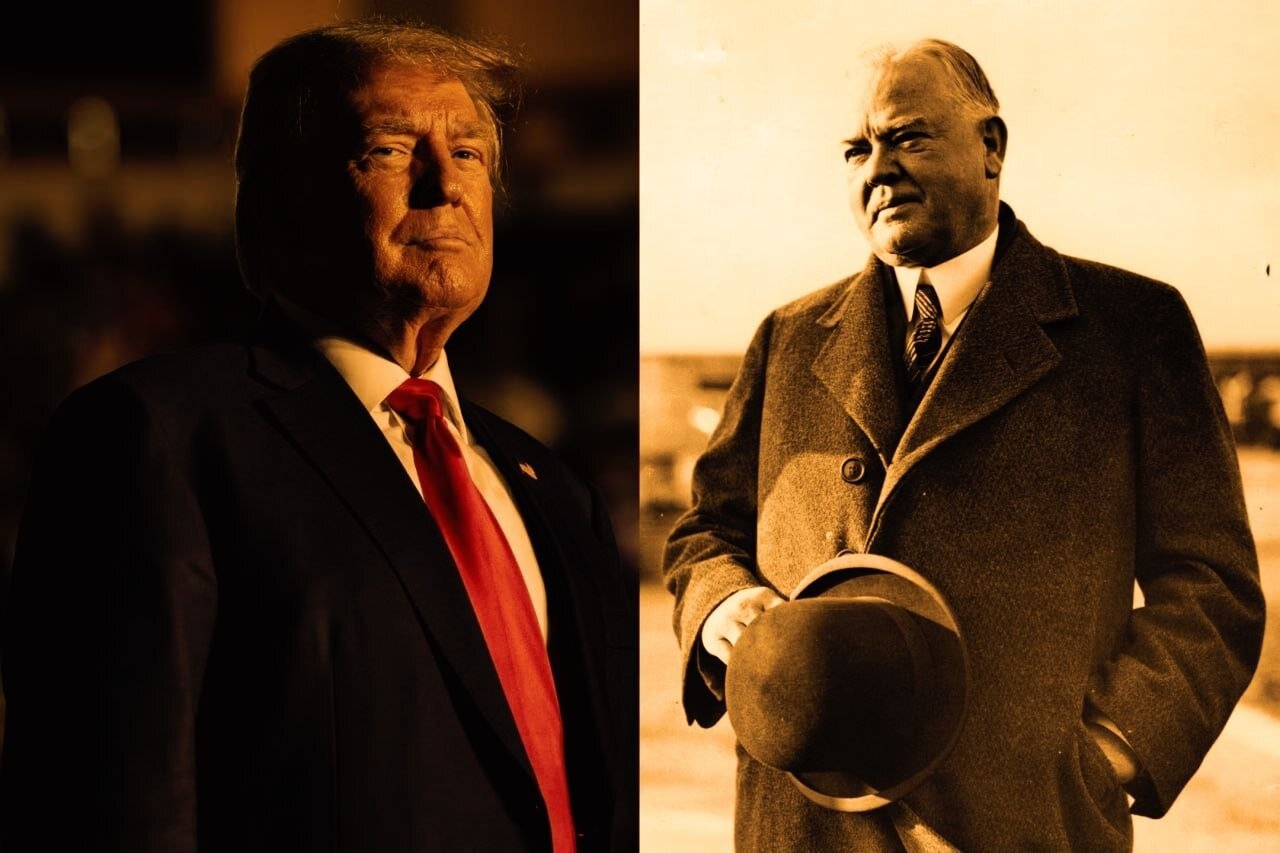
Trump has said more than once that he does not want to become Herbert Hoover. The comparison haunts him because both men entered office as businessmen promising competence and both faced the risk that economic failure would define their records.
Rising pump prices, exhausted reserves and midterm arithmetic leave two unattractive paths: risk wider war to force the strait open, or accept Iranian oversight and own the strategic loss. Either choice carries political cost.
Trump understands that voters will not punish him for a convoluted geopolitical disaster. They will obliterate him for runaway inflation and fuel shortages.
The reckoning is arriving anyway. Chinese crude imports, artificially depressed by earlier inventory liquidations, are expected to rebound soon.
Refiners in Asia are returning to the physical market in August to rebuild stockpiles. When that demand hits a system with depleted reserves and a fractured Persian Gulf, the paper illusion will shatter.
Washington waged a war to destroy Iran. Instead, it suffered a humiliating defeat, drained its own reserves, handed operational authority of the Strait to Tehran, and reduced the American presidency to a trading signal.
Leave a Comment